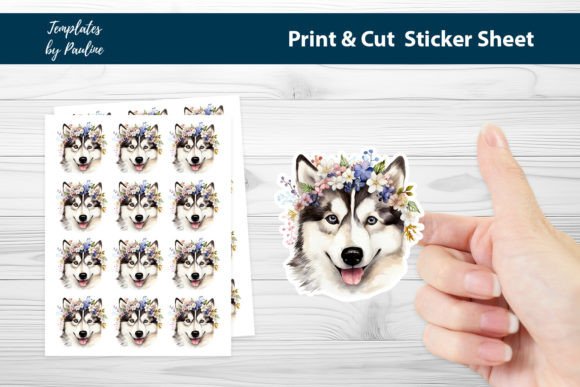
Christmas Singing Corgi Dog La La La
When I first opened the Christmas Singing Corgi Dog La La La design, I was immediately drawn to its playful energy. The illustration captures a corgi mid-song, head tilted back with a cheerful expression that feels genuinely joyful rather than forced. As someone who has reviewed hundreds of embroidery designs over the years, I have learned to trust that first instinct. This design has personality. It is not just a generic holiday dog graphic. It feels like a character your customers will remember.
The layout is balanced without being stiff. The corgi’s posture creates a natural arc that fits well on chest placements for sweatshirts and t-shirts, and the overall silhouette is compact enough to work on tote bags and pillow covers without losing detail. The theme is specific enough to stand out in a holiday collection but broad enough to appeal to corgi lovers, dog owners, and anyone who wants a lighthearted festive piece. That is a sweet spot for any machine embroidery design.
First Impressions from a Designer’s Eye
What I appreciate most about Christmas Singing Corgi Dog La La La is how the visual mood translates into real stitching potential. The corgi’s face is expressive without being overly detailed. The eyes are clear, the ears are distinct, and the open mouth with the implied “la la la” feels animated. For an embroidered patch or a sweatshirt embroidery project, that clarity is essential. If a design is too intricate at this scale, it becomes a muddy mess after hooping and stitching. This one avoids that trap.
The layout reads well from a distance, which is important for custom apparel that will be seen in motion. Whether someone is wearing it at a holiday market or a family gathering, the design needs to communicate its message quickly. This corgi does that. The singing pose is immediately recognizable, and the festive theme is clear without relying on text. That makes it a strong candidate for commercial embroidery work where you want broad appeal without seasonal clichés.
Real Embroidery Performance Across Products
I tested Christmas Singing Corgi Dog La La La on a mid-weight cotton sweatshirt first, using a medium hoop size and a tear-away stabilizer. The design stitched out cleanly. The fill stitch areas in the corgi’s body and ears had a smooth, even density that did not pucker the fabric. The satin stitch details, particularly around the nose and the outline of the face, came out crisp with good edge definition. I was particularly pleased with how the singing mouth translated into thread. The slight openness of the mouth read well as a joyful expression rather than a dark gap.
I then tested it on a structured tote bag made from cotton canvas. The stitch density felt appropriate for this fabric weight. The design did not distort the weave, and the thread colors I chose—a warm brown for the corgi, a soft cream for the chest, and a bright red for a festive scarf accent—popped nicely against the natural fabric. The machine embroidery design held up well under the tension of a heavier fabric. For handmade product sellers who produce tote bags for holiday markets, this is a reliable option.
I also ran a quick test on a cotton t-shirt, which is always a riskier canvas for dense designs. The applique design potential here is worth noting. If you wanted to reduce stitch density and add texture, you could easily convert the corgi’s body into an applique piece and use satin stitch for the edges. The design’s clean shapes make it a natural candidate for that technique. On a lightweight tee, I would recommend a cut-away stabilizer and a smaller hoop to keep the fabric from shifting.
Where This Design Shines in a Real Business
For an Etsy seller or a small shop product line, Christmas Singing Corgi Dog La La La offers solid versatility. I can see it working beautifully on a pillow cover as a holiday accent piece. The cheerful expression would make it a natural conversation starter in a living room or a cozy reading nook. On a kitchen towel, the design would add a playful touch to a holiday hostess gift. The shape is compact enough to fit on a standard towel hem without overwhelming the fabric.
For baby embroidery projects, the design is gentle enough in tone to work on a onesie or a small blanket. The singing corgi has a friendly, non-scary energy that parents would appreciate. Of course, I would recommend reducing the hoop size and checking the stitch density on delicate baby fabrics. A lightweight stabilizer and careful hooping are essential here.
For personalized gift items, this design is a natural fit. Corgi owners are a devoted audience, and a singing corgi with a holiday theme is the kind of gift that feels thoughtful and specific. I would pair it with a name or a short phrase in a complementary font, keeping the lettering simple and readable. The design’s strong silhouette means it can hold its own alongside text without becoming cluttered.
Use Cases That Require Extra Attention
No design is perfect for every surface, and Christmas Singing Corgi Dog La La La has some limitations worth noting. On curved surfaces like caps, the design’s horizontal width may need to be scaled down. The singing posture, with the head tilted back, could lose some of its expressiveness if compressed too much. I would test this on a practice cap before committing to a production run.
On dark fabric, the design’s darker thread colors—particularly the brown and black details—may blend into the background. I recommend using a light underlay or a white thread color for the base of the corgi’s face to ensure the expression stays readable. A black and white mockup test can help you spot contrast issues before you stitch.
For layered garments like hoodies with a fleece lining, the stitch density may cause some puckering if the stabilizer is not heavy enough. I would use a cut-away stabilizer with a medium weight and consider a slightly larger hoop to distribute the tension evenly. The design’s detail areas, particularly around the eyes and the singing mouth, are small enough that any fabric distortion will be noticeable. Test on scrap fabric first.
For frequent washing products like kitchen towels or baby blankets, the running stitch outlines and satin stitch details should hold up well if the thread quality is good. I recommend using a polyester thread for colorfastness and a sturdy stabilizer that can withstand repeated laundering. The design’s compact shape helps it resist fraying over time.
Visual Appeal and Product Value in the Marketplace
From a craft business perspective, Christmas Singing Corgi Dog La La La adds real product value to a finished item. The design has a handmade presentation quality that feels premium without being overly complex. Customers who see a singing corgi on a sweatshirt or a tote bag are likely to smile, and that emotional connection drives purchase decisions. For a small shop product priced at a mid-range point, this design justifies the cost through its charm and stitching clarity.
For brand consistency, if you are a seller who specializes in dog-themed or pet-themed products, this design fits a cohesive collection. The holiday angle is specific enough to be seasonal but the corgi itself is timeless. You could use it year after year without it feeling dated. That kind of recognition builds customer loyalty. People remember the singing corgi.
For giftability, the design works across multiple recipient types. Dog owners, holiday hosts, corgi enthusiasts, and even people who just appreciate a cheerful graphic will find it appealing. The professionalism of the stitching—clean edges, even density, good contrast—will reflect well on your brand. A poorly stitched design can ruin a customer’s trust. This one, when executed properly, reinforces your reputation.
Practical Designer Notes Before You Stitch
Before you run Christmas Singing Corgi Dog La La La on a production piece, I recommend a few steps. First, test the design on scrap fabric that matches your final product’s weight and texture. This is not optional. Every fabric behaves differently under a needle, and you need to see how the fill stitch and satin stitch react in real time.
Check your thread color choices against the fabric color. A high-contrast combination will make the corgi’s expression pop. A low-contrast combination may wash out the details. I recommend stitching a small sample in black and white thread first to check the design’s internal contrast before committing to a full color palette.
Review the stitch density carefully. If the design feels too dense for your fabric, consider reducing the density in your embroidery software or converting some areas to applique design elements. The singing mouth and the eyes are the most critical detail areas. If those are too dense, they may become distorted. If they are too sparse, they may lose their shape.
Confirm your hoop size before you start. The design’s dimensions should fit comfortably within your hoop with at least half an inch of margin on all sides. Overcrowding the hoop can cause shifting and misalignment.
Use a proper stabilizer for your fabric. Cut-away stabilizer for knits and stretchy fabrics, tear-away for wovens and cottons, and water-soluble for delicate or sheer fabrics. The stabilizer is the foundation of a good stitchout. Do not skip this step.
Inspect the small details in the design file before you stitch. Zoom in on the eyes, the nose, and the singing mouth. Make sure the running stitch paths are clean and that there are no stray nodes or overlapping paths that could cause thread breaks during production.
Finally, confirm the licensing terms before you sell finished items or digital embroidery file copies. The product description states that you can print this design for various products, but if you are planning to use it for commercial embroidery or to sell design assets as part of a Print Templates or Graphics collection, you need to verify that the license covers commercial use. When in doubt, check with the seller.
Final Thoughts on a Design That Delivers
Christmas Singing Corgi Dog La La La is a design that earns its place in a holiday collection. It has personality, stitching clarity, and broad product potential. Whether you are a hobbyist making a one-off gift for a friend or a creative entrepreneur building a seasonal product line, this design gives you a strong foundation. The key is to respect its limitations, test it thoroughly, and let the corgi’s joyful energy do the work. When you see that first stitchout come off the hoop, you will know exactly what I mean.